


Enterprise application development (EAD) is foundational to any business that needs to build software to gain a competitive edge or streamline operations. Whether you want to develop a custom ERP or design an automated workflow, an enterprise app development solution is essential. The key is to choose one that simplifies the app development process and, ideally, makes it possible for a range of stakeholders to take part.
Here, we dive into what enterprise-level application development is, its goals, key features, and benefits, and how to build enterprise apps.
Key Insights
- Tailor your app development: By creating an app tailored to your needs, you avoid spending money on an off-the-shelf solution that either falls short in terms of features or isn’t able to scale as your business grows.
- Use a user-centric approach: By focusing on the needs of your end users, you both create more useful apps and encourage widespread adoption across your enterprise.
- With Visual LANSA, you get a professional, low-code app development platform built to add quality and speed to your IBM i development projects.
What Is Enterprise Application Development?
Enterprise application development is a process of designing, deploying, and supporting software built for use in a large organization. What is an enterprise app? An enterprise app is different from a customer-facing app, which is usually designed for a broader user base. Enterprise applications, on the other hand, are built to help a company create more efficient workflows, better manage their data, or perform a specific, value-adding function.
Why Is Enterprise App Development Needed?
Enterprise app development is essential when your current tools, systems, or off-the-shelf applications can no longer meet the unique demands of your business. Whether you’re scaling operations, modernizing legacy systems, or improving internal and external experiences, custom application development can help your enterprise gain the power needed to bridge the gap.
Goals of Enterprise App Development
The goals of Enterprise App Development serve as the guiding force behind your dev lifecycle, because they decide which features you’ll include. Your overall goal, as a company, is not necessarily to turn your business into a software development enterprise. However, if you have multiple goals, you may end up building more than one app to meet them. Here are some of the goals many businesses focus on:
Automate Business Processes
EAD is a powerful tool for streamlining complicated or error-prone business processes because you can use it to automate multiple business-critical, time-consuming tasks. If streamlining business processes is one of your primary goals, you can start by identifying bottlenecks or manual tasks that are often prone to error.
For example, some businesses ask their employees to copy data from one application to another. This can add several hours to a work week, and it’s easy for employees to make mistakes along the way.
Improve Productivity
Enterprise application development is also effective at improving productivity, especially because you can first identify operational elements that hinder productivity and then use EAD to build a solution that addresses the problem.
For example, many companies struggle when it comes to collaboration. Even though employees can connect through online chatting tools, it can be difficult to share vast amounts of data as it is produced. However, you can build an application that automatically collects and shares project data. In this way, it enables workers in different locations to instantly share information and collaborate.
Enhance Security and Compliance
By using enterprise application development, you empower your team to create apps that meet your unique security needs. Similarly, it’s easier to stay within compliance regulations when you have control over how an app manages data and interacts with both your network and the internet.
Enable Scalability
When a business uses a typical, off-the-shelf application, it may not continue to meet its needs as the company grows. But, by using enterprise application development, you can adjust the scope of functions of each app you build as your organization evolves.
Gain Competitive Advantage
When you establish an enterprise application development program, you can create innovative solutions relatively quickly. In competitive markets, this can enable you to outperform your competition or reduce costs and then pass those savings on to your customers.
Streamline Data Analysis
Many enterprise apps process data produced by operations. In this way, they centralize important data, which makes it easier to collect and analyze. You can also use enterprise app development to build automated analytical systems that provide insights based on your data.
Key Features of a Successful Enterprise App
A successful enterprise app enables you to modernize fast and within budget while giving you enough features to improve:
Integration
Integration is a core element of any enterprise app that needs to unify data from different sources. You can integrate data from multiple applications you already use, using an enterprise app you develop as a central hub. This can save significant time because it eliminates the need for employees to switch back and forth between screens or even workstations.
Integration can be one of the more complicated facets of your app development. However, Visual LANSA makes this easier by providing you with a simple drag-and-drop interface, pre-made templates, and tools that save you time when it comes to cross-platform development. For instance, with LANSA, you can integrate data from a mobile app and one connected to a manufacturing process, uniting them in a central, easy-to-navigate dashboard.
Reliability
An enterprise app is beneficial because you have complete control of its design. Often, when you use an off-the-shelf solution, you may come across errors and bugs, simply because it’s a very complicated app designed to meet the needs of many different kinds of businesses.
Troubleshooting these issues or waiting for an update from the manufacturer can decrease productivity and hinder operations. But with EAD, you have control over the programming of each feature, and if issues arise, you can quickly address them right away.
Customizability
An effective enterprise app is often customizable because it has to meet the needs of multiple departments or different kinds of stakeholders.
For example, you can design an enterprise app that automatically writes emails that incorporate data from your product catalog. This can help the marketing team include the specifications of products that leads might be interested in. At the same time, you may want to make it customizable so the sales or product support teams can benefit from it as well. For instance, you can design the app to automatically pull product specifications for inclusion in a customer support ticket. By infusing this kind of flexibility, you will also gain widespread support for your EAD development program.
Benefits of Enterprise Applications
When building your own apps, you enjoy a number of benefits, several of which are hard to achieve when you simply buy a pre-made app:
Custom Data Flows for Better Decisions
Customized data flows that benefit your company’s decision-making processes. The data and analysis that help your company gain an advantage are likely very different than those of other organizations. When you build your own enterprise apps, you can make sure they collate the data you need for performing essential analyses.
Highly Flexible Features
With EAD, you’re not limited to the features a manufacturer assumes businesses in your sector need. Rather, you can design whatever helps your teams work more productively and make changes whenever necessary.
Improved Data Security
Enterprise app development puts you in complete control of your data. Some companies are wary of trusting cloud-based apps because their data gets stored in an unknown, inaccessible server. But with EAD, you can decide where and when data moves and how to keep it secure.
Faster Development with Lower costs
The right development solution can save you a lot of time, especially when compared to hiring outside developers to build your app. For example, with a development platform like Visual LANSA, you get tools that make it easy to click and drag in features that could otherwise take many hours to code.
Yachiyo Industries, a Japanese company that manufactures automotive parts, experienced the benefits of Visual LANSA firsthand. Yachiyo wanted to bring its business systems development process completely in-house. Using Visual LANSA, Yachiyo’s team was able to build a web app for its parts molding process system. It plans to develop more solutions for 50 other parts processing systems across five different locations in Japan.
How to Build Enterprise Applications
Building a successful enterprise application involves assessing your needs and then breaking the process down into phases. Here are the basic steps successful organizations follow:
- Define goals. To define your goals, you have to identify the business problems you want to solve with the application you build. You also use desired outcomes to guide the goal-setting process. Getting the full scope of goals may require interviewing employees and other stakeholders regarding what they need or expect from the app.
- Design prototypes. The prototype design process starts with creating a page-by-page wireframe of the app. You then make some basic decisions about how the user interface will look and what the user experience should feel like.
- Develop the front end and the back end. The front end of your application should be user-friendly and responsive to different types of devices, such as laptops, phones, and tablets. The back end should enable dependable app functions and, if possible, optimize the cost of storing and managing data.
- Optimize your application. The first step in the optimization process is testing your app to see how it performs for different types of users and whether its features meet your goals. Optimization is also key as you fine-tune the user experience. Therefore, the optimization process often involves building several iterations, each one taking into account feedback from key users.
Technologies and Tools Used in Enterprise Application Development
Traditional enterprise application development typically involves many of the same Programming languages used in building applications for the general public. Some of these include Java, Python, C#, JavaScript, or Kotlin.
There are also frameworks and libraries, such as React and Angular, that can add consistency to the development process.
Many have turned to Microsoft Azure, Google Cloud Platform, or Amazon Web Services for cloud-based applications.
However, low-code Enterprise application development eliminates the need for many of these tools by giving you pre-made components that you can simply combine to build your app. With low code, your team doesn’t have to know languages, such as Python, JavaScript, or Swift, to develop their applications.
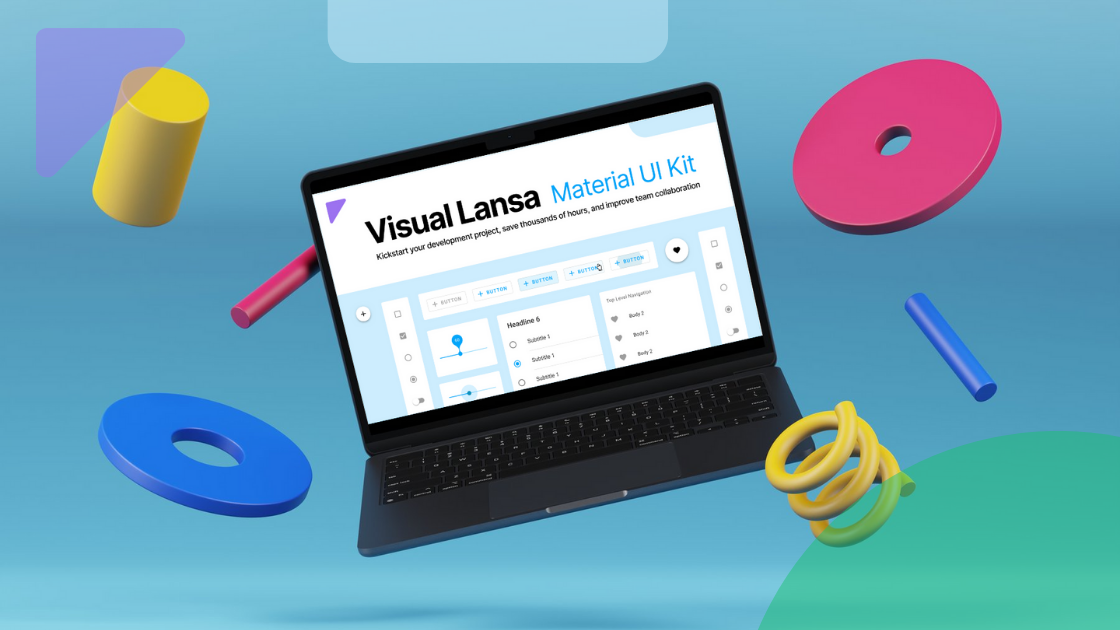
This is where Visual LANSA can make a big difference. Visual LANSA’s pre-made tools and templates make it so even those with little to no prior development experience can build fully functional, professional applications. Whether you’re trying to streamline operations, automate repetitive tasks, develop a customer-facing web app, or something else, Visual LANSA can save you time and resources. Reach out today to learn more.