


Modern businesses use composable commerce to transform their digital storefront development and scaling processes. The approach enables you to select the best individual solutions, which you can then combine into a customized system tailored to meet your specific requirements. The composable approach enables digital leaders, CIOs, and CTOs to achieve faster innovation while making upgrades easier and maintaining complete control over customer touchpoints.
Composable commerce is gaining widespread traction, with 99% of retailers already adopting or planning to adopt the approach.. This guide explains the fundamentals of composable commerce, demonstrating its operational principles, comparing it to other models, and outlining its path to long-term business expansion.
Key Insights
- Composable commerce enables maximum flexibility by allowing businesses to build e-commerce systems using modular, best-of-breed tools, rather than relying on a single vendor platform.
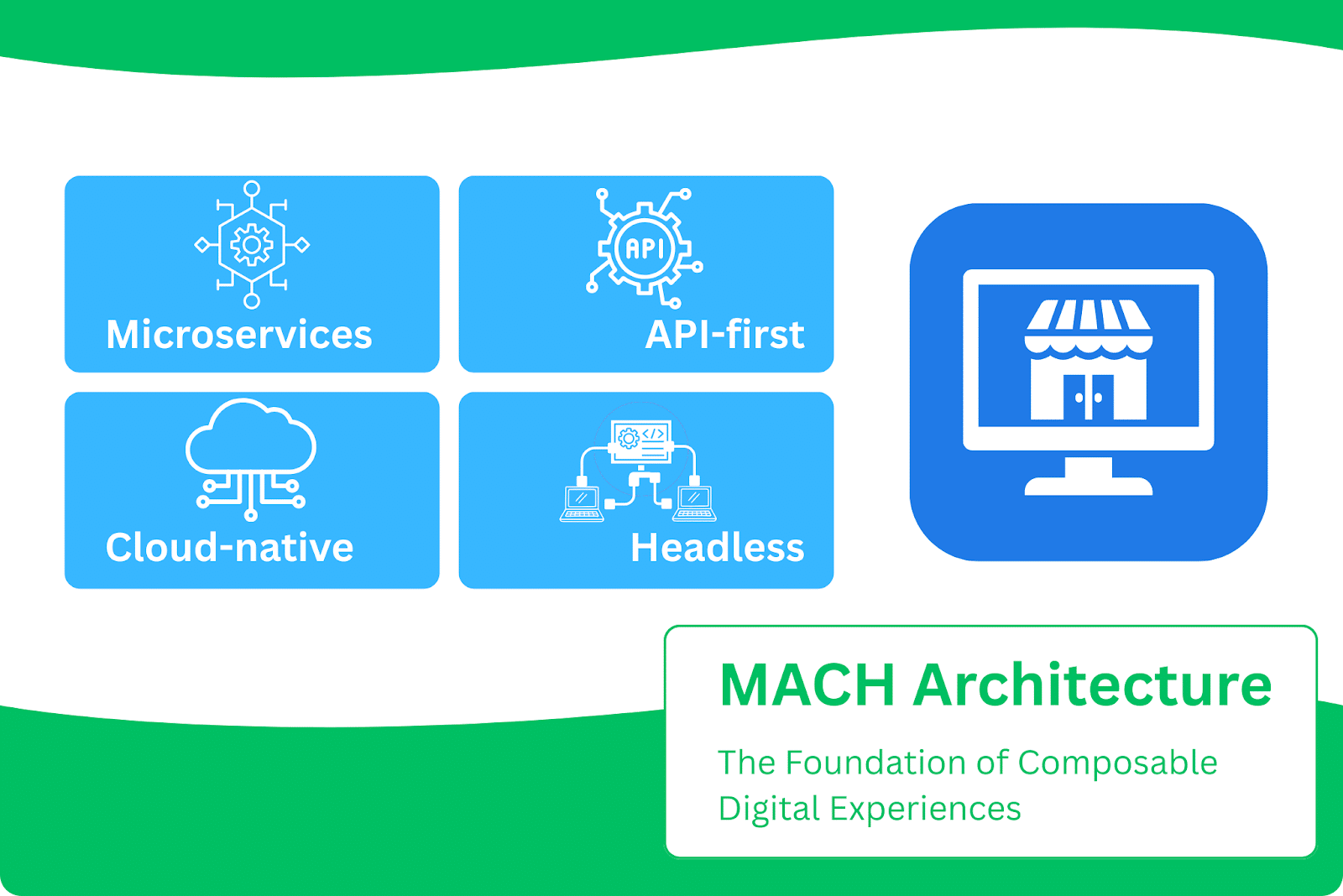
- MACH architecture—comprising Microservices, API-first, Cloud-native, and Headless—is the foundation that powers composable commerce, supporting rapid updates, independent scaling, and seamless integration.
- Compared to traditional monolithic systems, composable ecommerce offers faster time-to-market, greater agility, and better scalability by decoupling and customizing every part of the tech stack.
- It supports highly personalized, omnichannel customer experiences, helping businesses respond quickly to shifting consumer expectations across web, mobile, and in-store environments.
- LANSA’s upcoming Composable Commerce platform delivers enterprise-grade support, low-code development, and seamless integration for both IBM i and Windows, making composable adoption more accessible than ever.
What is Composable Commerce?
Composable Commerce is a modern eCommerce system development method that enables businesses to construct their technology stack through modular best-of-breed components instead of using a single all-in-one platform. Each business function receives its optimal tool selection through API-based integration of best-in-class components.
The fundamental structure of composable commerce relies on MACH architecture, which is an acronym for Microservices, API-first, Cloud-native, and Headless. We’ll explore each of these components in more detail in another section below.
Businesses gain increased flexibility, speed, and control through this setup, which enables them to rapidly respond to changing customer requirements and market trends.
This is an alternative to the monolithic legacy eCommerce platforms that combine all system components into a single unified platform. The initial convenience of these legacy systems evolved into significant limitations over time.
Why Composable Commerce Matters for Businesses
Let’s explore why composable commerce is important for businesses in this section.
Composable commerce provides strategic and operational advantages that traditional e-commerce platforms can’t match. Here’s why it matters:
- Greater Agility: Your system can launch new features quickly for testing and iteration without requiring a complete system overhaul. The solution is most effective for businesses that require rapid response to customer trends and market changes.
- Tailored Customer Experiences: Use best-of-breed components to create unique, personalized journeys across every channel—web, mobile, kiosk, or even in-store.
- Faster Time-to-Market: The ability to deploy changes independently by development teams leads to faster innovation cycles and reduced delays.
- Reduced Vendor Lock-in: Your business operates independently from any particular vendor’s system. You can replace or enhance particular services whenever needed to maintain market competitiveness.
- Improved Scalability: Handle growth and traffic spikes more efficiently by scaling individual components based on demand.
- Future-Proof Architecture: The adoption of composable commerce follows MACH principles, which enable your technology infrastructure to adapt more effectively to changes and evolve more efficiently in the future.
For forward-thinking businesses, composable commerce is more than a tech trend—it’s a long-term investment in flexibility, speed, and sustained digital growth.
How Composable Commerce Works
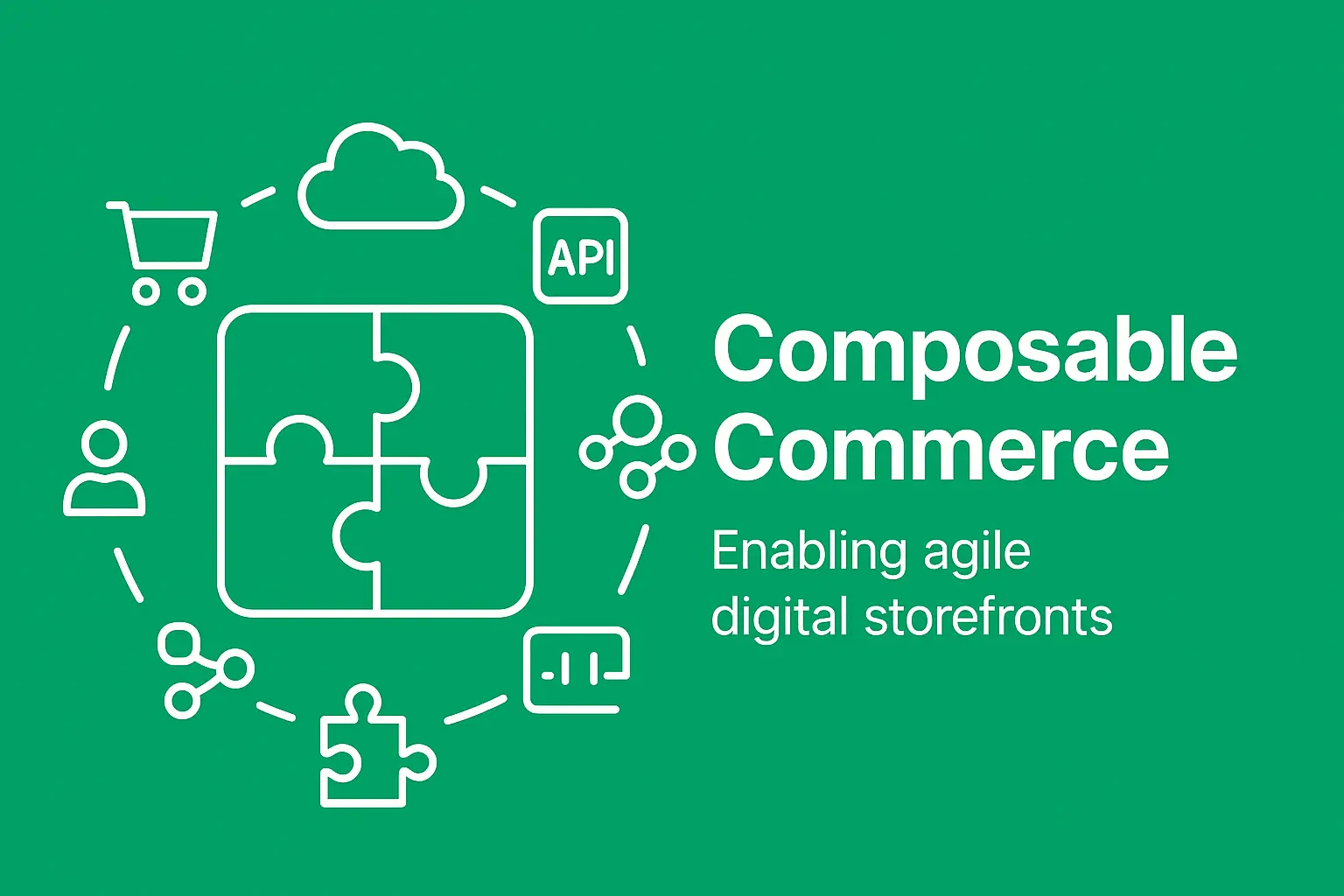
The primary foundation of composable commerce is a powerful architectural approach known as MACH. MACH is an acronym for Microservices, API-first, Cloud-native, and Headless. It makes composable systems more flexible and faster.
Let’s break it down:
- Microservices: Each part of your commerce platform—like payments, search, or inventory—is an independent service. That means you can update or replace one feature without touching the rest of your system.
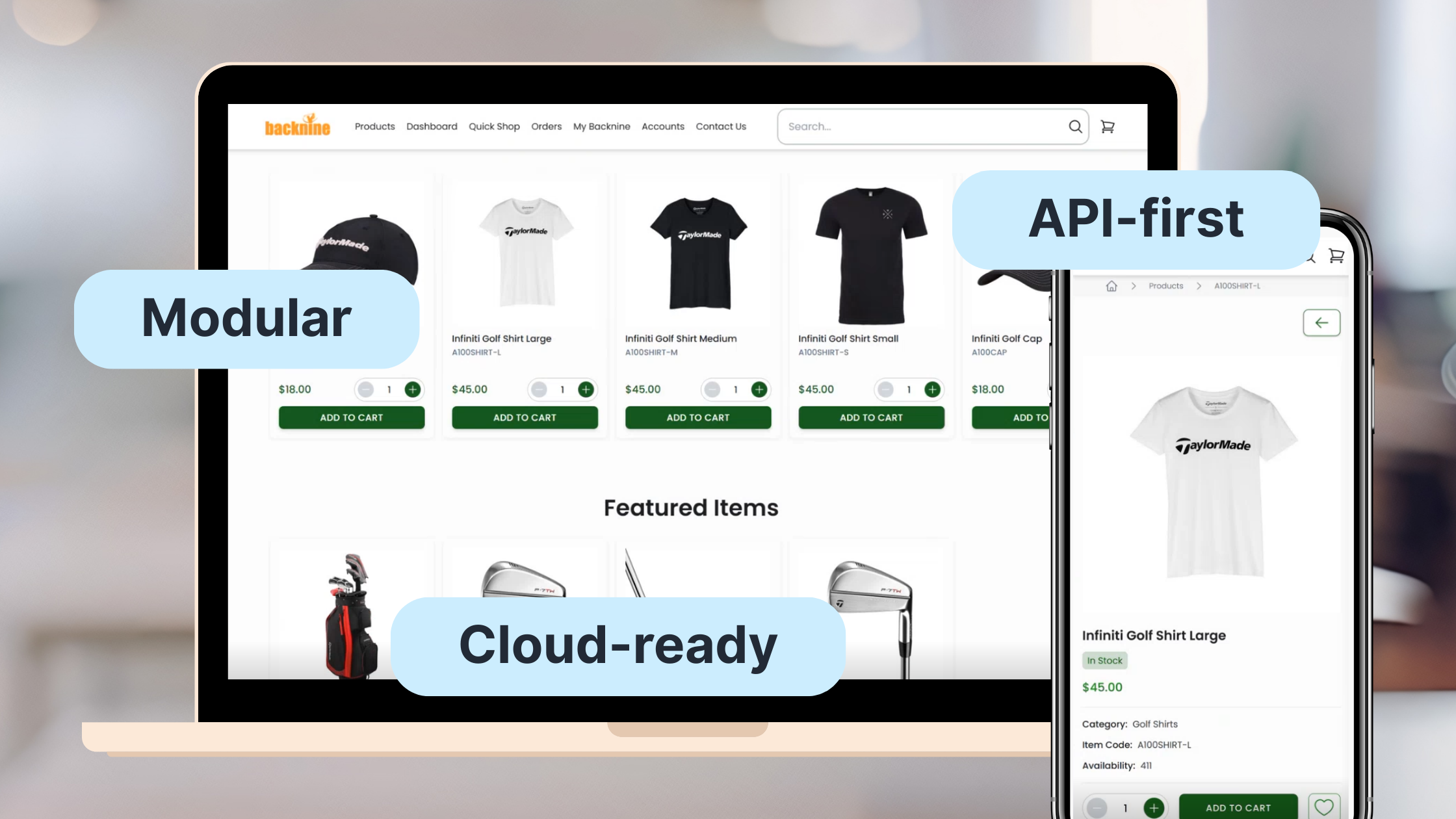
- API-first: Every component communicates through APIs. This allows your tools to “plug and play,” no matter which vendor they come from. It also ensures smooth integration with existing systems and future innovations.
- Cloud-native: Composable commerce platforms are designed to run in the cloud. That means better uptime, global scalability, automatic updates, and less maintenance for your IT team.
- Headless: The frontend (what customers see) is completely separate from the backend (where the logic lives). You can create different user experiences for web, mobile, kiosks, or even smart devices—all while using the same backend.
Together, MACH architecture enables you to assemble a tech stack tailored to your exact needs. Want to upgrade your product search experience without rebuilding the whole site? Need to roll out a mobile-first UI in just weeks? Composable commerce makes that possible—quickly and cleanly.
This approach also ensures that legacy systems or slow-moving platforms don’t constrain your business. Instead, you’re free to build, evolve, and innovate at your own pace.
Composable Commerce Advantages
Businesses choose composable commerce because it delivers multiple technical and strategic advantages. The approach enables you to create an e-commerce experience that will last through time by providing flexibility and scalability. Let’s explore some of the key advantages.
Unlimited Flexibility & Agility
A composable commerce system provides businesses with the freedom to operate beyond traditional system constraints. Your platform development becomes flexible because you can select individual services and tools to build your platform. You can enhance your checkout process without affecting any other section of your website.
The flexible nature of composable commerce enables teams to accelerate innovation while simplifying the deployment of new features and maintaining leadership in the evolution of customer expectations.
Personalized Customer Experiences
Each independent component within a composable stack enables simpler integration of specialized tools for personalization and recommendations, as well as localization and additional features. The shopping journey at scale becomes easy to customize through composable commerce when you need to deliver mobile-first experiences, support regional languages, or create offers for specific user segments.
Reduced Vendor Lock-in
Traditional platforms often force you to rely on a single vendor for everything. Composable commerce changes that. You’re free to choose the best solution for each function—whether it’s a CMS, payment gateway, or product search engine—and swap it out whenever something better comes along. This freedom minimizes risk and puts you in control of your tech stack.
Increased Efficiency
Composable commerce allows different teams to work on separate system components simultaneously. This streamlines workflows and reduces bottlenecks. The platform remains unaffected by updates and changes, which shorten development cycles, reduce operational costs, and accelerate time-to-market.
Better Performance & Scalability
Need to scale your search service during a flash sale? Or optimize site speed during high traffic periods? With a modular system, you can scale specific services based on demand without overwhelming the entire platform. Composable commerce ensures that your performance grows with your business, not against it.
Composable Commerce vs. Headless Commerce
It’s easy to confuse headless commerce with composable commerce—after all, both offer more flexibility than traditional monolithic platforms. But while they share some similarities, they serve different purposes and have different scopes.
Key Differences and Similarities
Headless commerce decouples the frontend (what users see) from the backend (where logic and data live), allowing businesses to build custom user interfaces across web, mobile, or other channels. The backend services—like product management, cart, and checkout—are still typically part of a single platform.
Composable commerce, on the other hand, goes beyond just separating the frontend. It also breaks apart the backend into modular components. That means you can choose best-of-breed services for each part of your stack—CMS, payment, search, analytics—and connect them using APIs.
Both approaches are API-driven and support custom experiences, but composable commerce offers greater architectural freedom and long-term scalability.
Use Cases for Each Model
- Headless commerce is a great choice if:
- You want to keep your existing backend platform but need custom frontend experiences.
- You’re building omnichannel UIs—like websites, mobile apps, kiosks, or voice commerce.
- You need more control over design and performance, without a full backend overhaul.
- Composable commerce is ideal if:
- You need maximum flexibility and want to handpick tools for every function.
- You’re expanding into new markets and need systems that can adapt fast.
- Your development teams require autonomy and faster release cycles.
- You’re moving toward a modern MACH architecture for long-term scalability.
In short, headless is a step toward modernization, while composable is the full leap. Many businesses start with headless and evolve into composable as their needs grow.
Composable Commerce vs. Traditional Commerce
Still, the traditional monolithic commerce platforms continue to operate many businesses, while composable commerce represents the future of digital retail. Analyzing the restrictions of traditional legacy systems can help understand why businesses need to adopt a composable architecture beyond its benefits.
Limitations of Traditional Monolithic Systems
Lack of Flexibility
The monolithic platform combines all components, including frontend and backend systems, with CMS and checkout functionality, as well as product data storage, into one unified system. The close integration between system components necessitates extensive development work for even minor feature updates.
Slow Time-to-Market
Rolling out new features or integrations often demands full deployment cycles. Teams must work around dependencies, which delay innovation and responsiveness.
High Vendor Lock-in
The business operations of the companies often remain dependent on the strategic direction, pricing structure, and technical boundaries set by their chosen vendor. The process of replacing one component in the platform demands a complete migration of the entire system, which proves costly and dangerous.
Limited Personalization
Traditional systems provide standard personalization features, yet they lack the functionality to integrate sophisticated tools for AI recommendations, behavior-based content, and localized experiences.
Scalability Challenges
As traffic or data volume grows, scaling a monolithic system usually means scaling the entire stack, even if only one part (like search or checkout) is under pressure. This can be costly and inefficient.
Difficult Omnichannel Support:
The design of traditional commerce platforms focused primarily on web-based operations. The transition to mobile apps, kiosks, IoT, and other digital touchpoints demands workarounds and compromises.
The composable commerce approach enables the independent evolution of system components, allowing your digital experience to expand in line with your business growth, rather than creating obstacles.
How to Tell if Composable Commerce is Right for Your Business?
Although composable commerce provides clear advantages, it’s not a solution that fits all businesses in the same way. The next evolution of business operations suits certain organizations perfectly. However, some businesses need a gradual transition approach. The following steps help you determine whether composable commerce aligns with your business objectives, team capabilities, and current technological infrastructure.
1. Does your business prioritize speed and agility?
If your business needs to launch new features rapidly, test experiences, or enter new markets, composable commerce is best suited for your business. It provides the flexibility to move quickly without disrupting your core system.
2. Do you want to deliver highly personalized experiences?
If your business requires customized customer journeys that span multiple channels, regions, and devices. The composable method enables simple integration of personalization engines together with recommendation systems, localization tools, and additional features.
3. Are you tired of being boxed in by your platform?
If your current platform limits your capabilities or forces you to use the built-in tools that do not meet your requirements, composable commerce is the solution. It offers businesses vendor independence by allowing them to select the best tools from various vendors, rather than being confined to built-in tools that do not meet their requirements.
4. Do you have an experienced or growing development team?
The flexibility of composable commerce comes with a need for careful system integration and management. Your success in composable commerce depends on having either an internal team or a digital partner who understands APIs and cloud-native architectures.
5. Is your business scaling or expanding?
If you are experiencing high traffic growth, your business is expanding globally, or you are launching new brands or sales channels, composable commerce enables your business to expand through component-level scaling instead of upgrading your entire platform.
Still unsure? Starting with a headless frontend or composable components as a hybrid approach will help you transition smoothly while building a strong foundation for future success.
Getting Started with Composable Commerce
If you’re ready to break free from platform limitations and take control of your digital commerce architecture, getting started with composable commerce may be easier than you think.
The initial step involves evaluating your existing technology infrastructure to determine which components require enhanced flexibility and performance improvements, including the CMS, checkout systems, product catalog, and frontend elements. You can start replacing these components with modular API-connected solutions either through individual replacements or as part of a planned migration process.
You don’t have to go all-in overnight. Many organizations start with a headless frontend or swap out one backend service to test the waters. The key is to approach composable commerce as a journey, not a switch.
Coming Soon: LANSA Composable Commerce
To support businesses on this journey, LANSA is preparing to launch a new Composable Commerce platform designed to help you move faster and smarter in today’s digital economy. Built on MACH architecture principles and designed with enterprise-grade flexibility in mind, the LANSA solution will offer:
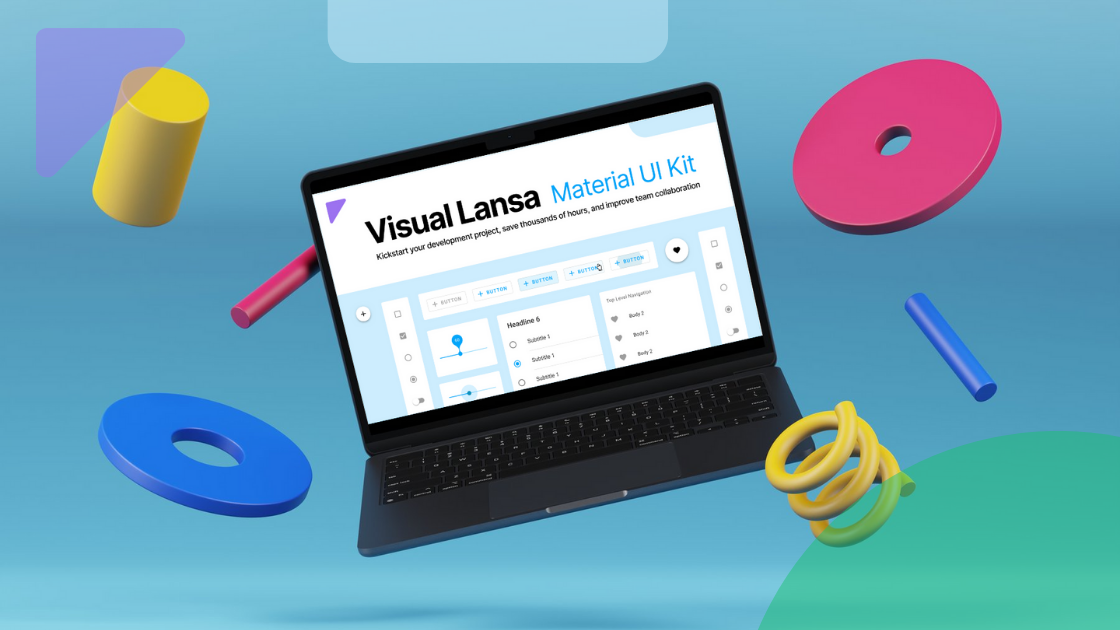
- A low-code development environment to accelerate integration and reduce time-to-market
- Out-of-the-box connectors and APIs to simplify composable implementation
- Seamless support for both IBM i and Windows environments
- Tools for custom frontend experiences across web, mobile, and beyond
This solution will make it easier for both technical and non-technical teams to adopt composable practices without the steep learning curve.
To learn more, explore our Future-Ready Product Updates or contact our professionals.
Conclusion
The term “composable commerce” represents a smarter, faster, and more flexible method for constructing your digital commerce ecosystem. The control you have over your entire tech stack through composable commerce enables your teams to deliver superior customer experiences while adapting swiftly to market changes and securing your business future.
The composable commerce approach enables organizations to achieve the necessary agility and innovation, remaining competitive through its ability to overcome monolithic system constraints, reduce vendor dependence, and create personalized, cross-channel customer journeys.
Ready to take the next step?
The upcoming Composable Commerce platform from LANSA provides initial support for users operating on IBM i, Windows, and hybrid environments. Our low-code tools, robust integration capabilities, and enterprise-level support will enable you to transition from legacy systems to leading-edge solutions.
Contact us today to learn how we can help you build your own composable commerce strategy—or sign up to get early access to the new platform.