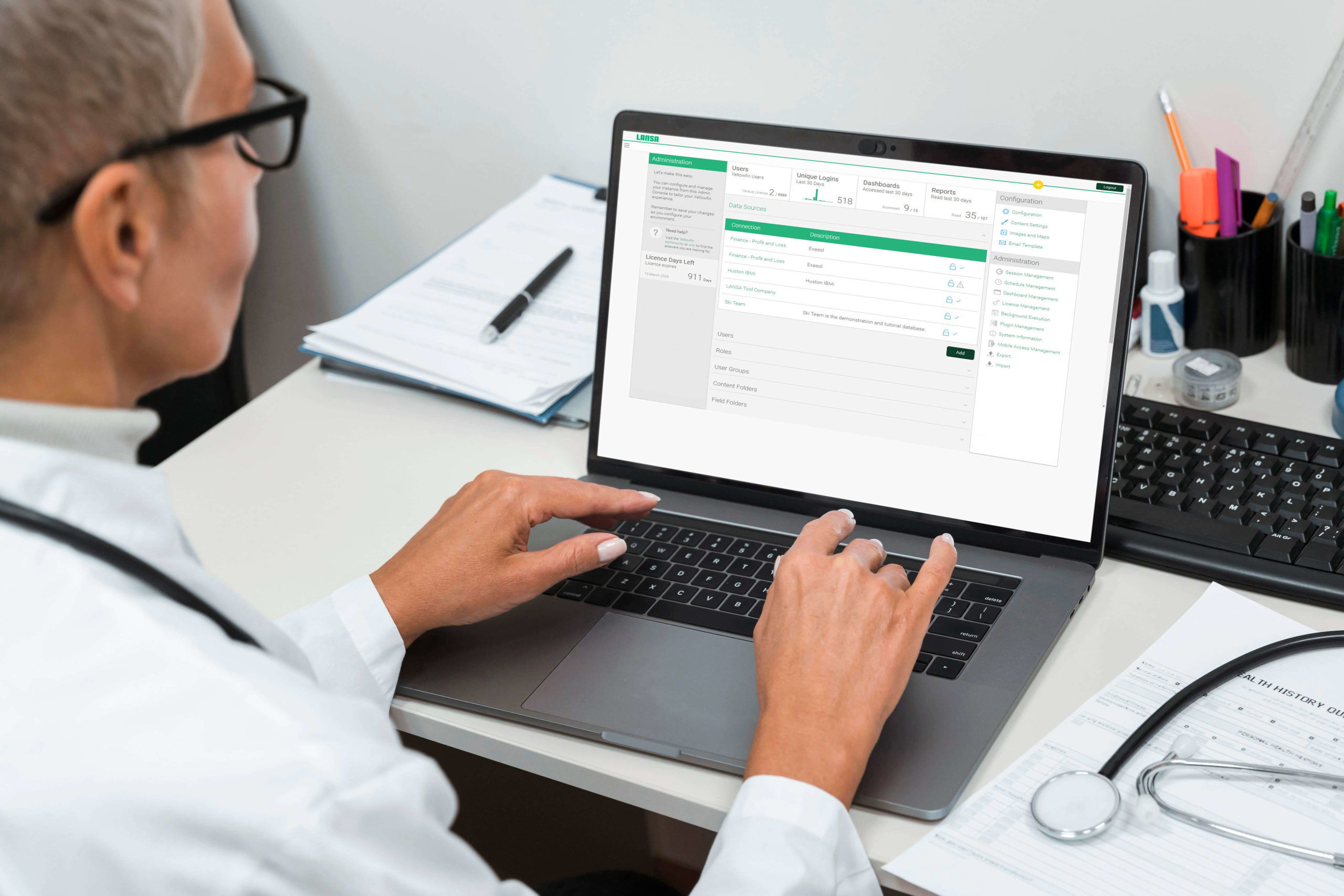




A business intelligence platform brings data from disparate sources across the business into a single environment for presentation, analysis, and sharing. It transforms raw data into structured insights through visualizations, dashboards, and multimedia narrative reports. A BI platform serves as a reliable foundation for understanding performance, identifying trends, and making faster, more accurate decisions.
Today, businesses work with data from various systems, including sales, finance, customer, and operations tools. Without a business intelligence platform, this data often remains scattered, making it difficult for teams to identify patterns or understand performance.
Modern BI platforms are designed for more than just analysts. Executives, managers, and frontline teams can all access insights without technical skills, making business intelligence a core part of day-to-day work rather than a separate reporting function.
Choosing the right business intelligence platform is just as important as understanding what it does. Different organizations have different data environments, users, and goals, so the right solution must align with both current needs and future growth. Factors such as ease of use, scalability, integration with existing systems, and strong data governance all play a role in long-term success. A well-chosen BI platform delivers value today while continuing to support better decisions as the business evolves.
Key insights
- A business intelligence platform transforms data into actionable insights, supporting informed decision-making across the organization.
- The growing volume of business data across siloed systems makes BI platforms essential for improving visibility and identifying performance gaps.
- A BI platform collects, cleans, and visualizes data from multiple sources to support real-time analysis and collaborative meaning-making.
- Successful BI adoption depends on selecting a platform that supports broad data integration, enables self-service analytics, strengthens governance, and scales for long-term growth.
- LANSA BI delivers modern BI experiences out of the box, supporting widespread adoption among non-technical, first-time users or those replacing legacy reporting tools.
Why Are Business Intelligence Platforms Important for Businesses?
A good business intelligence platform connects data directly to action. Organizations that understand the benefits of business intelligence
are better positioned to align strategy, operations, and performance around consistent, data-driven insights.
A good business intelligence platform connects data directly to action. Instead of relying on guesses or outdated reports, teams work with real-time, reliable information, ensuring decisions are based on accurate, up-to-date data. Organizations using BI tools report up to 27% improvement in decision-making speed and 91% of companies had planned to expand BI investments.
By creating a single source of truth, a business intelligence platform improves consistency across the organization, reduces conflicting numbers, and strengthens trust in the data used for operational and financial decisions. For instance, a BI platform can combine sales data, customer activity, and financial data into one BI dashboard. With it, leaders can immediately see how revenue, customer behavior, and operational performance relate to each other in real time. This visibility is critical in today’s fast-moving markets, where organizations must quickly understand what is happening across the business in order to respond to changing demands and conditions. Keeve reported that data-driven companies are 23x more likely to acquire customers.
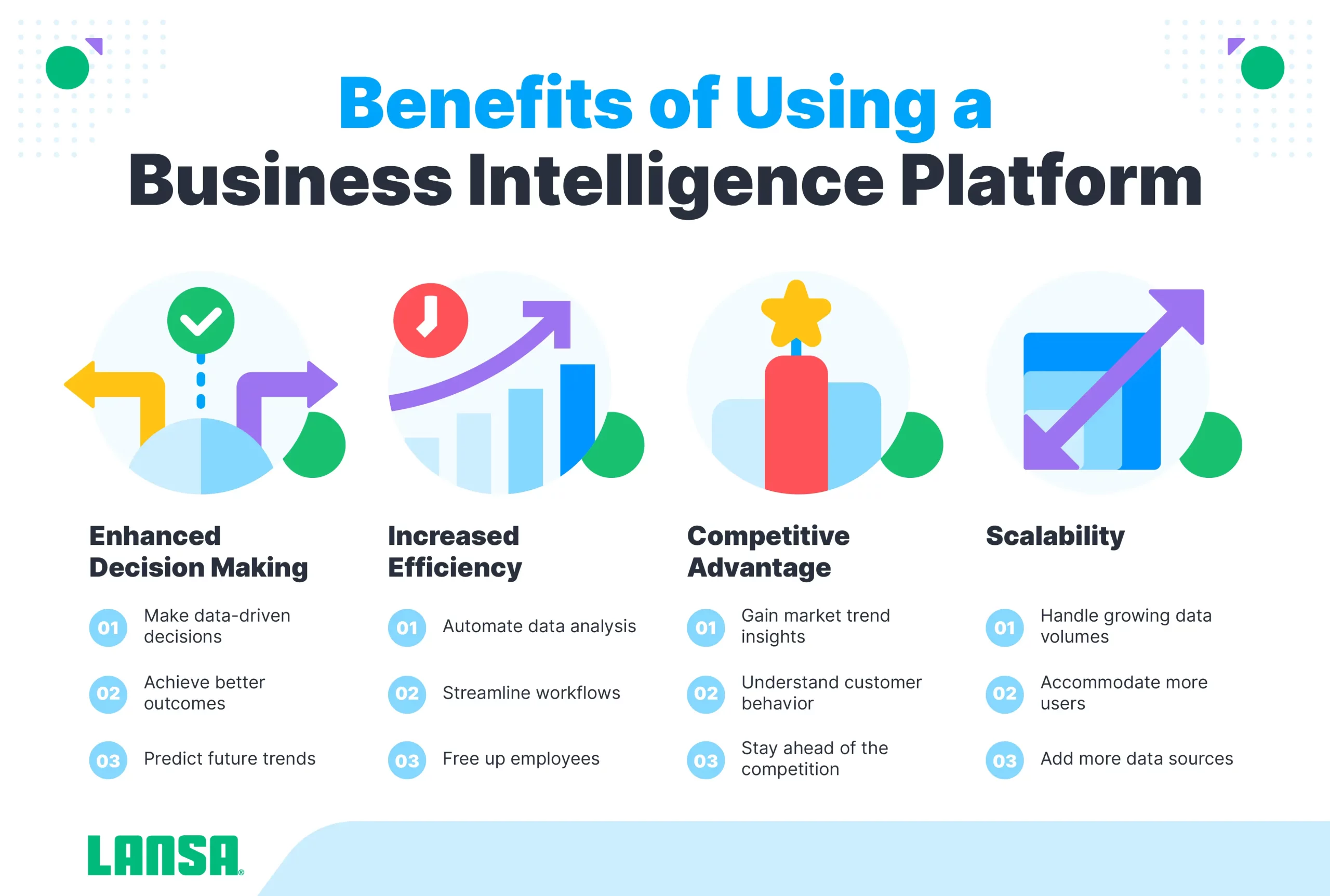
Modern BI platforms also enable self-service analytics, allowing business users to explore data independently without advanced technical skills. Managers, executives, and operational teams can access dashboards, drill into reports, and ask questions directly from the data. This ensures that insights are available when decisions need to be made. For example, a sales manager can adjust pricing or promotions when demand drops, an operations team can reallocate inventory when stock runs low, and finance leaders can quickly identify cost overruns or revenue gaps. Instead of waiting for analysts to produce reports, teams can act immediately based on the latest data.
Beyond responding to immediate issues, business intelligence platforms also support better forecasting. By analyzing historical performance and current trends, leaders can anticipate shifts in demand, understand customer behavior, and identify growth opportunities earlier. In fact, more than three‑quarters of global enterprises consider BI essential for operational and strategic planning, and organizations using BI report significantly faster decision-making and improved return on investment.
A business intelligence platform is also easier to scale as organizations grow. Traditional reporting processes often rely on spreadsheets, manually compiled reports, or custom queries that require constant maintenance from analysts and IT teams. As data volumes increase and more users require access to insights, these approaches quickly become inefficient and difficult to manage. BI platforms address this challenge through automated reporting, scheduled refreshes, and centralized dashboards that reduce manual effort and errors. This allows teams to focus on improving processes instead of compiling data. Over time, these efficiency gains help control costs, improve productivity, and support stronger profitability.
In addition, BI platforms strengthen security and data governance. Centralized access controls, role-based permissions, and audit capabilities ensure sensitive data is protected while still being accessible to the right users. This balance of access and control reduces risk, supports compliance, and ensures insights remain trustworthy as data usage expands.
BI Platform Benefits Recap
- Improved data consistency and trust through a single source of truth
- Greater access to insights through self-service analytics
- Faster decision-making with real-time, actionable insights
- Better forecasting and planning through analysis of historical and current data
- Greater operational efficiency through automated reporting and centralized dashboards
- Scalable analytics capabilities for growing data volumes and users
- Stronger data governance and security through centralized access controls
How Do Business Intelligence Platforms Work?
A business intelligence platform transforms raw data into actionable insights through a structured workflow that includes data collection, preparation, analysis, and visualization. Each stage ensures data accuracy, relevance, and usability for decision-making.
Gather Data
The first step is collecting information from across the organization. In a BI platform, this means connecting to the systems where business data is generated. Common sources include ERP systems, CRM tools, finance applications, cloud software, spreadsheets, and legacy databases.
These connections are typically established through built-in connectors, APIs, or direct database queries. Instead of looking at data in isolation or manually exporting files, the platform retrieves information directly from operational systems and consolidates it into a central analytics environment.
Related article: Integrating IBM i Data with Multi-Platform Insights
For example, a retailer may combine sales transactions, inventory levels, supplier deliveries, and customer orders. When these records are viewed together, teams can see which products are selling, whether stock levels can meet demand, and how supply chain activity affects revenue.
Clean Data
After collection, the information must be prepared before it can support analysis. Records from different systems often contain duplicates, missing values, or inconsistent formats that prevent accurate comparisons.
Cleaning and preparation involve correcting errors, standardizing fields, and aligning records across datasets so information can be evaluated consistently.
BI platforms support this step with built-in preparation tools that profile datasets, detect inconsistencies, and apply validation rules based on pre-defined business logic. These capabilities reduce manual cleanup and ensure dashboards reflect reliable information.
Visualize Data
Once preparation is complete, the BI platform presents the information through dashboards, charts, and reports. Visualization converts structured datasets into formats that are easier to interpret than raw tables.
Typical visualizations include line charts for trends, bar charts for comparisons, pie charts for distribution, and KPI dashboards that track performance. Because BI platforms connect directly to underlying systems, these visualizations can update in real time as new data becomes available.
Dashboards allow teams to monitor metrics such as revenue growth, operational performance, or customer activity from a single interface.
Watch this demo: IBM i Data Reporting and Visualization
Understand Data
Business intelligence platforms help analyze data to uncover meaningful insights. This includes identifying trends, correlations, outliers, and patterns that are not immediately visible in raw data. Built to help teams understand context and drivers behind performance, not just surface-level results, they provide interactive BI reporting tools that allow users to filter views, drill through details, and compare data across different dimensions.
For example, a business may identify declining sales in a specific region. By analyzing related operational, customer, and delivery data together, the BI platform can help highlight contributing factors such as fulfillment delays, changing customer behavior, or product availability. These insights enable leaders to prioritize actions based on evidence rather than assumptions. Modern solutions may also include AI-assisted capabilities to interpret data faster.
Outcome: Democratized Access to Data
Ultimately, a business intelligence platform expands access to data across the organization. Instead of relying on IT teams for every report, users can explore insights on their own, while governance rules continue to protect sensitive information and maintain data integrity.
With interactive dashboards presenting real-time data at the point of decision-making, end users can act quickly and with confidence. They no longer need to wait on IT for data pulls and can query additional information on demand using plain language. Designed for self-service, BI platforms allow non-technical users to customize reports on the fly and create personalized workflows that support their roles.
As the McKinsey report shows, broader access to consistent, trusted data promotes wider BI adoption, which can translate to stronger organizational alignment, better business outcomes, and sustained competitive advantage. With the right BI platform, you can also free up your IT team to refocus on higher-value initiatives such as improving data architecture, supporting new business requirements, and driving innovation.
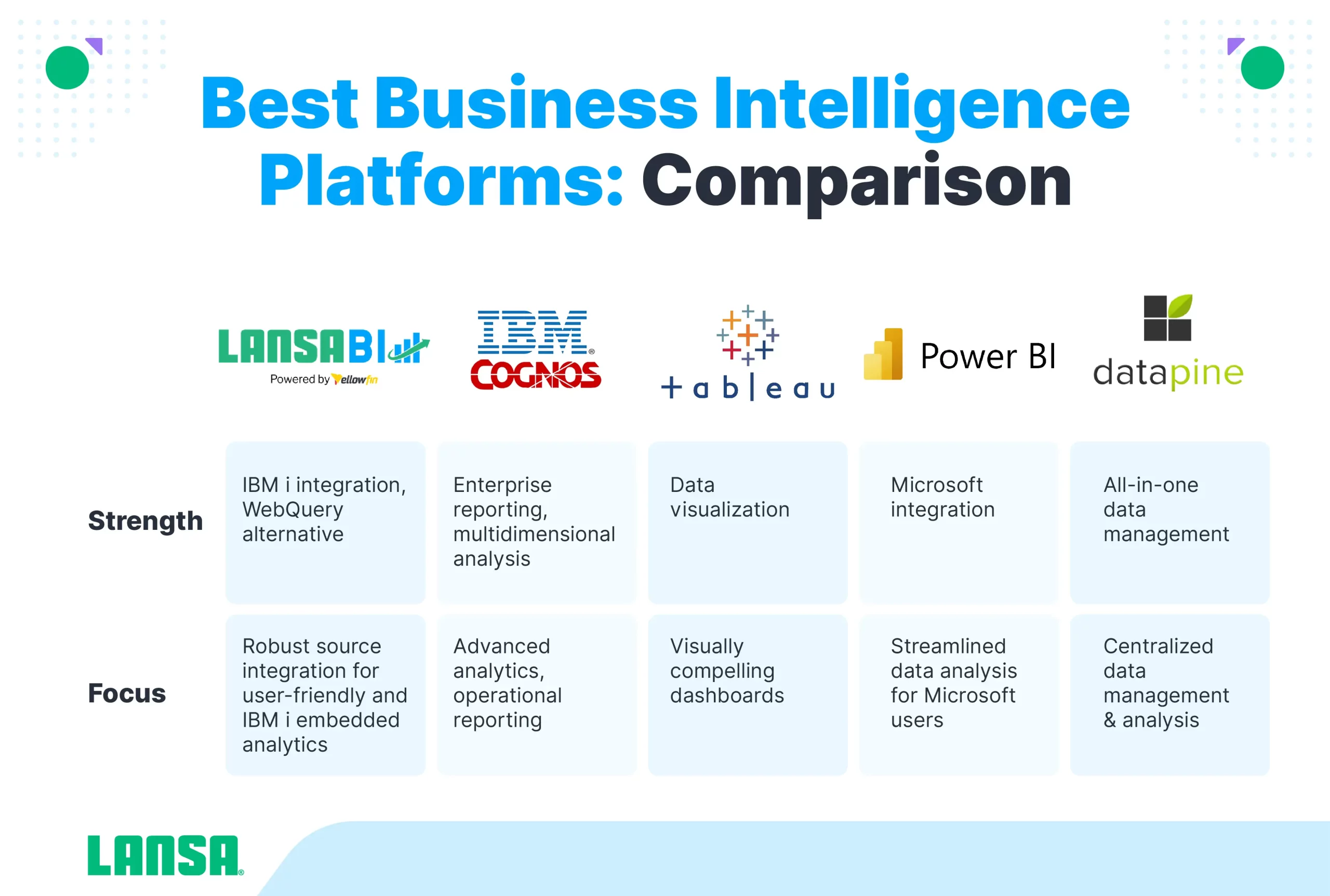
Considerations When Choosing a Business Intelligence Platform
Choosing the right business intelligence platform requires more than reviewing a feature list. Decision-makers need to consider how the platform will support the organization over time, including its ability to scale with growth, remain easy to use, maintain data control, and deliver long-term reliability. A strong BI platform should address current business needs while remaining flexible enough to adapt as priorities, users, and data volumes evolve.
Below are the key considerations when shortlisting business intelligence platforms, along with practical guidance on what to look for and what to avoid.
Scalability and Performance
As businesses expand, data volumes increase and more employees across departments require access to dashboards and reports.[3] A business intelligence platform must support this growth in users and data without slowing down or becoming unstable.
Test how the BI platform performs with large datasets and multiple users. Ask whether it can scale storage and processing power as data increases. Cloud-based BI platforms often make this easier, but on-premise solutions should also support growth through flexible architecture.
A common mistake is choosing a BI platform that works well during early use but struggles as demand grows. Slow dashboards and long refresh times reduce trust and adoption.
Ease of Use and Self-Service Analytics
A BI platform only delivers value if people actually use it. Since not everyone is a data expert, ease of use is critical for adoption across the organization.
Check whether non-technical users can create dashboards, explore data, and answer questions without extensive training. Look for clear navigation, guided workflows, and self-service analytics features that reduce reliance on IT teams.
Avoid BI platforms that require technical skills for basic reporting. When every request depends on IT, insights are delayed and users lose interest.
Watch this demo: IBM i Dashboards for Real-Time Analytics
Integration and Data Connectivity
A business intelligence platform is only as useful as the data it can access. If it cannot connect to your systems, insights will be incomplete.
Look for native connectors to ERP systems, CRM tools, databases, cloud applications, and even legacy platforms for comprehensive reporting. Open APIs and standard data connectors can help ensure flexibility as your technology stack evolves.
Platforms that rely on manual data exports or custom workarounds create delays and increase the risk of errors. These approaches also make real-time insights difficult.
Automation and Workflow Efficiency
Automation reduces manual effort and keeps insights current. Without it, BI often turns into another reporting burden.
Check for automated data refreshes, scheduled reports, and alerting based on key metrics (e.g. monitor thresholds and detect trend anomalies). These features help teams stay informed without repetitive, manual analysis, enabling faster responses to changes.
However, automation should be applied thoughtfully. Automating reports that do not support real business decisions or sending too many data notifications can overwhelm users and make it harder to focus on the insights that matter.
Watch this webinar: Analytics Your End-Users Will Love
Data Governance and Quality
Decisions are only as good as the data behind them. Strong governance ensures that insights are accurate, secure, and trusted.
Review role-based access controls, audit logs, and compliance features. A strong BI platform should support data quality rules, track data sources, and manage access according to user roles.
Poor governance leads to conflicting reports, data misuse, and compliance risk. If users do not trust the data, they will stop using the platform.
Built-In Intelligence and AI Capabilities
AI features can help users discover insights faster by highlighting trends, anomalies, and patterns that may not be obvious.
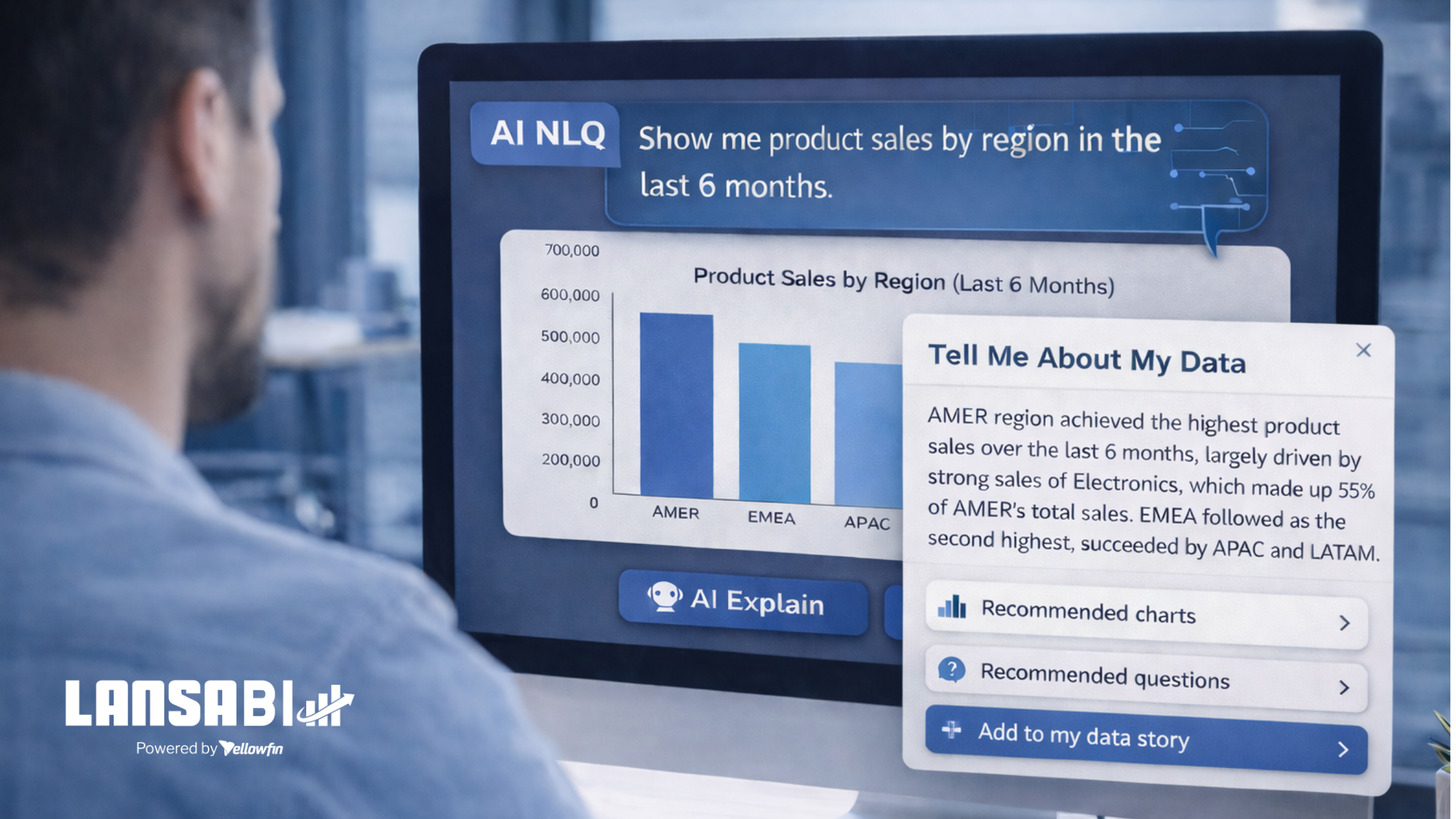
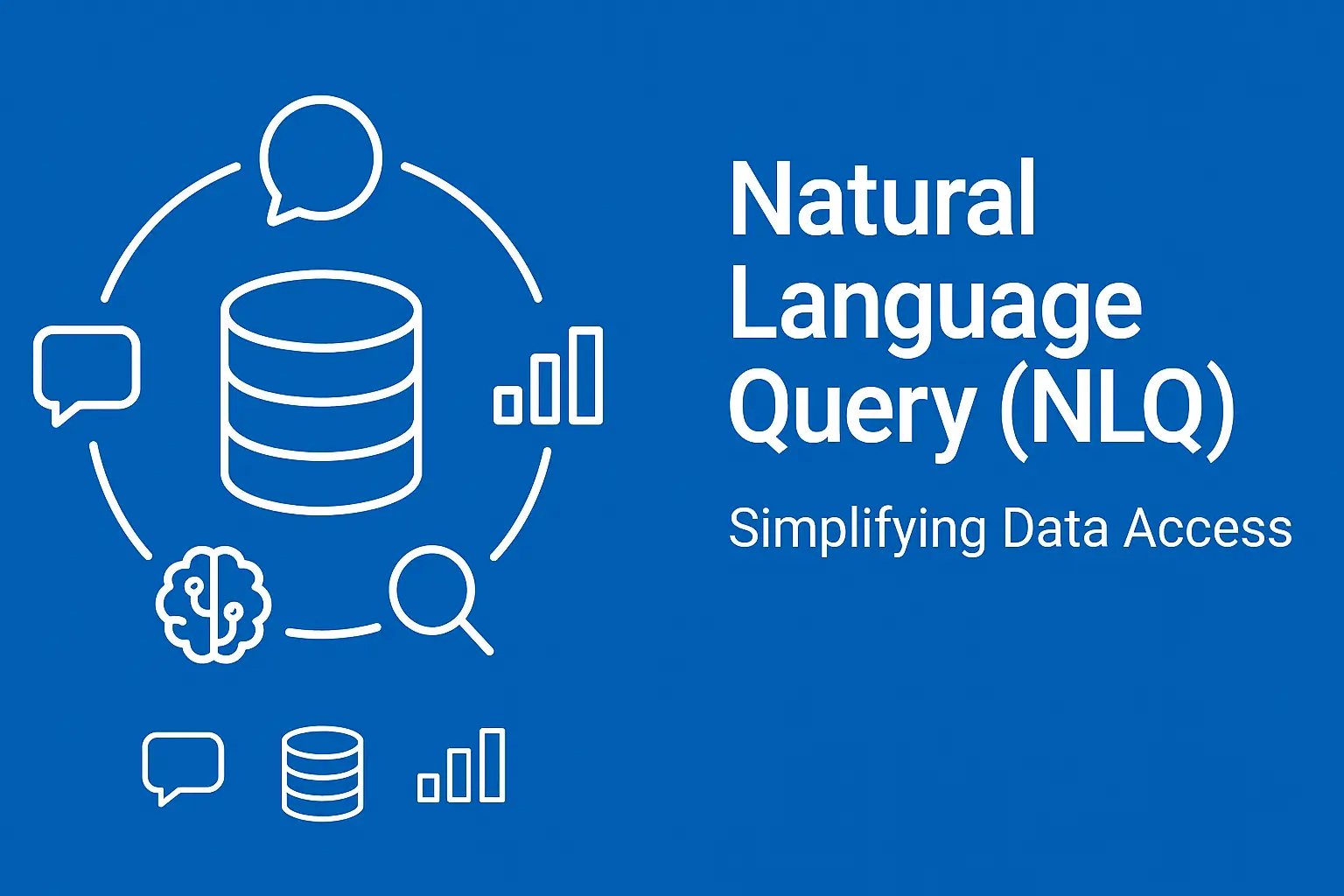
BI platforms with Natural Language Querying (NLQ) allow users to ask questions in plain language and instantly retrieve relevant data. BI software like LANSA BI also include Assisted Insights that automatically explain the relationships, contributing factors, and comparisons behind key metrics using contextual, statistically grounded analysis.
Related article: Making Data-Driven Choices with Assisted Insights Generation
With generative AI now integrated into modern BI platforms, narrative reports and data stories can also be created with a single click. However, structured data models and governance controls remain essential for ensuring insights are accurate and reliable.
Deployment Flexibility
Organizations have different infrastructure, security, and compliance requirements. A BI platform should support deployment models that align with these needs.
Determine whether the platform supports cloud, on-premise, or hybrid deployment. Flexible deployment options make it easier to integrate BI into existing environments while maintaining control over sensitive data.
Platforms with limited deployment options may create unnecessary infrastructure constraints or complicate integration with existing systems.
Vendor Reliability and Support
A business intelligence platform is a long-term investment. Vendor stability and support quality directly affect success.
Review customer feedback, support options, documentation, and product roadmaps. A reliable vendor should provide clear support processes and demonstrate a commitment to ongoing product improvement.
Vendors with limited support, unclear plans, or infrequent updates can create risk over time. Poor support often leads to downtime, unresolved issues, and stalled adoption.
How Can LANSA BI Help?
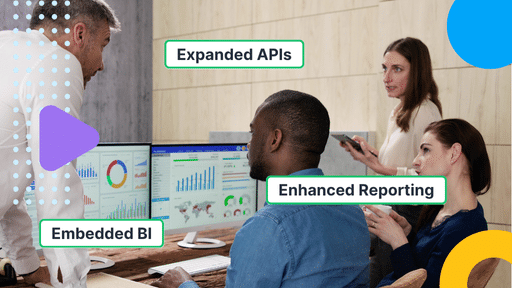
LANSA BI is an AI-powered business intelligence platform you can deploy either as a stand-alone or an embedded analytics solution. Designed to simplify reporting for non-technical users and to support IT with enterprise data governance, it excels in delivering modern data experiences out of the box.
Whether you’re implementing BI for the first time or replacing end-of-life tools, LANSA BI offers native integrations, intuitive self-service features, and flexible deployment options to accelerate adoption.
Watch this webinar to learn more: Modern Business Intelligence with LANSA BI
- Create reports and dashboards with simple drag-and-drop functionality
- Get answers from your data without coding using Natural Language Query
- Analyze data with interactive tools and AI-assisted insights
- Automate report distribution and set up critical alerts
- Collaborate on presentations and get AI assistance in building narratives
Turn data into action faster while reducing the burden on IT and supporting long-term growth. Contact us for a private demonstration or a free consultation with our BI experts to tailor a proof of concept to your needs.
References
[1] “The age of analytics: Competing in a data-driven world | McKinsey & Company.”
https://www.mckinsey.com/capabilities/quantumblack/our-insights/the-age-of-analytics-competing-in-a-data-driven-world
[2] “39 Business Intelligence Statistics for 2025 | KeeVee.”
https://www.keevee.com/business-intelligence-statistics
[3] “Business Intelligence Statistics | DataStackHub.”
https://www.datastackhub.com/insights/business-intelligence-statistics/
[4] “AI-driven operations forecasting in data-light environments | McKinsey & Company.”
https://www.mckinsey.com/capabilities/operations/our-insights/ai-driven-operations-forecasting-in-data-light-environments
[5] “A Systematic Literature Review on the Impact of Business Intelligence on Organization Agility | MDPI.”
https://www.mdpi.com/2076-3387/15/7/250